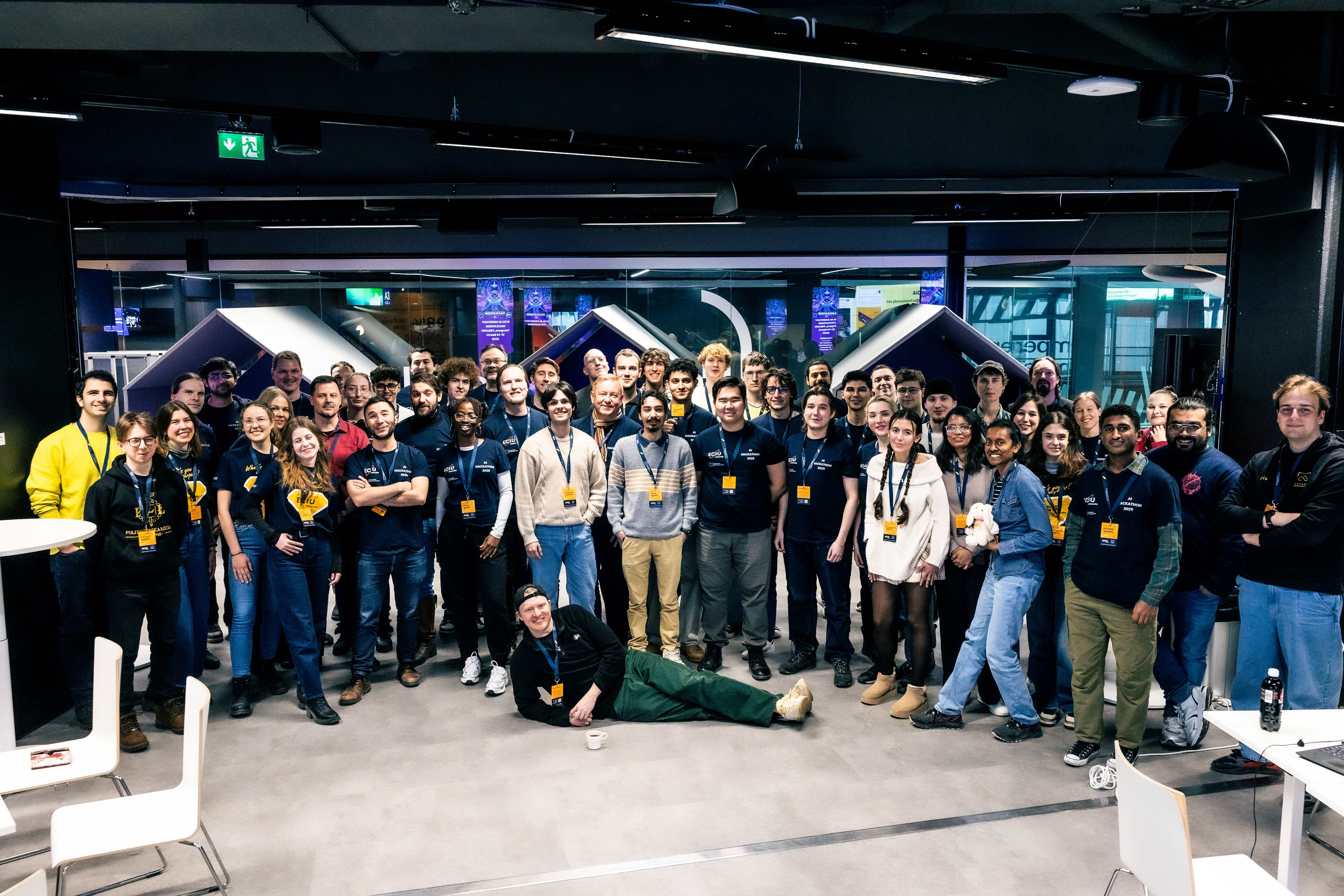
When you think about ECIU University, what’s the first thing that comes to your mind? For many students, teachers, staff members and partners, it’s the courses also known as learning opportunities – a diverse, constantly growing portfolio of micro-modules and Challenges from 12 member institutions across Europe.
With a focus on creative thinking, co-creation and innovation, these learning opportunities help learners develop practical skills to support their goals and career. They also let them tackle real problems and make a real impact – inspiring change together with like-minded community members.
What are micro-modules and Challenges?
Micro-modules are short courses that help learners fill the knowledge gaps and prepare for their future career, as well as participation in Challenges. Challenges are learning opportunities that focus on gaining new skills and experience through tackling real-life problems. They are often provided by businesses, organisations and societal partners across Europe. You can learn more about the opportunities ECIU University offers here.
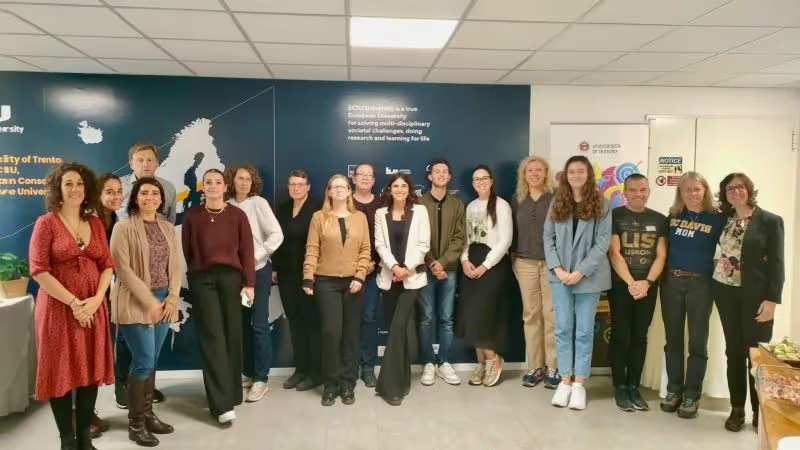
All of this is the result of tireless work and joint community effort – with one team, also known as Work Package 3, directly responsible for creating and integrating the portfolio into member institutions’ curricula.
We sat down with Dr Silvia Perzolli (University of Trento), ECIU University Educational Portfolio Coordinator, and Dr Dorothea Ellinger (Hamburg University of Technology), head of Work Package 3 and specialist on Challenge-Based Learning, to talk about the journey behind the course portfolio – and the effect it had on their paths.
What makes an innovative portfolio
While ECIU University learning opportunities are co-created by teachers and researchers across the community, it’s Dorothea and Silvia’s team that is responsible for guiding them, turning courses into a full-scale portfolio and introducing this portfolio into study programs across 12 universities.
The team consists of portfolio and educational points of contact from each member institution, and is built on several pillars and tasks – each equally important.
‘First, we consider societal needs and how they can be translated into Challenges and micro-modules,’ explains Dorothea Ellinger. ‘Then we think about how they can be embedded into each university’s curriculum and study program, and how to support the portfolio at each institution.’

‘We also work to ensure that the portfolio stays dynamic, innovative and focused on the relevant societal needs. We’re always thinking about how these needs can be transformed into learning opportunities – and how a learning opportunity can then benefit society.’
‘[This benefit] isn’t necessarily defined by simply finding a solution to a problem,’ she continues. ‘It’s also about giving people from different disciplines, backgrounds and countries an opportunity to connect, work together and make progress.’
For over 7 years now, the portfolio has been changing and evolving – with some incredible milestones achieved since launching the very first Challenge-only portfolio in 2019, the year ECIU University was created.
‘Back in 2023, we had just a few Challenges and micro-modules,’ shares Dorothea. ‘Today, there's a real portfolio of over 200 micro-modules and 150 Challenges. It’s a huge success.’
‘What began as a handful of opportunities is now a dynamic and innovative portfolio with a much wider selection of courses,’ agrees Silvia Perzolli.
However, it’s not just about the number of courses, she adds. Thanks to the team’s emphasis on co-creation and innovation, the portfolio’s transformation is about much more.
‘Over the years, we’ve been working to ensure the portfolio’s diversity and relevance,’ Silvia says. ‘New formats like workshops, seminars and summer schools are being considered, and the range of themes has grown wider too – with subjects like learning innovation or digital transformation.’
‘We focus on quality, not just quantity.’
A focus on co-creation
Building a portfolio is just the beginning. Next comes integrating it into the curricula of 12 different universities – each based in a different European country, with different study programs, priorities and mindsets.
The team develops a personalised approach for all institutions based on regular meetings and discussions. This way, they can keep members’ needs in mind and ensure alignment without compromising the crucial co-creation aspect.

‘It’s a difficult process that depends on the universities’ structure, their study programs and courses themselves,’ Silvia explains. ‘You can’t have a unified approach with strict rules here, which is why it’s important to understand the processes within the university and how you can actually support it.’
It’s a long process, with plenty of ups and downs, but the progress has been evident. As Silvia shares, the team has been integrating more and more learning opportunities into the curricula lately, with new initiatives – such as recurring courses from member universities – and institutional incentives introduced along the way. She sees a shift from a more experimental approach to real consolidation, and this opens the door to the portfolio evolving even further.
The team also collaborates closely with other groups within ECIU University – whether it’s working on the learner guidance, tracing the impact learners can make through the courses, or embedding the portfolio in the alliance’s IT infrastructure. And at the end of the day, it’s the joint effort that makes it possible.
‘There’s no team or work package [at ECIU University] we’re not connected with,’ says Dorothea. ‘We all form and co-create this portfolio together.’
‘We hope that we get to change things – at ECIU University and beyond.’
Taking the impact further
As the team works to introduce the portfolio to learners, teachers, and other community members, it doesn’t end with ECIU University alone. They're also sharing their achievements and exchanging good practices outside of the alliance by attending conferences across Europe.
For example, in April 2025, Silvia attended the International CBL Conference in Eindhoven (Netherlands) together with colleagues to talk about the implementation of Challenge-Based Learning at ECIU University. Such events are an important step for increasing the portfolio’s visibility but also for creating new connections and exploring new points of view, she shares.
'They help us reflect on Challenge-Based Learning and how it can operate in complex multi-institutional environments,’ Silvia explains. ‘Presenting our findings in international venues creates valuable opportunities to connect with international experts outside of ECIU University who may have different or wider perspectives on innovative education.’
Recently, the team also submitted their latest paper to the International Consortium for Educational Development (ICED) for a conference that will take place in Salamanca (Spain) in June.
The paper focuses on how Challenge-Based Learning can be implemented and aligned across institutions. As Silvia shares, they specifically paid attention to practices that can be applied in a broader context – and within the shared European framework.
‘We want to connect the experience of ECIU University with a broader academic debate,’ she says. ‘While this increases visibility and recognition of what we have achieved, it also creates a feedback loop. We get to engage with a wider audience of educators and researchers, refine our approach, and ensure we’re up to date with emerging practices and expectations on the European level.’
‘We want to create and maintain a dialogue.’
And this dialogue goes both ways – as some of their colleagues across Europe may already be taking notes from ECIU University’s experience.
As Dorothea explains, other portfolios often centre on courses that connect learners from different universities around the same topic or subject. Meanwhile, their approach is different and new to some alliances – with a selection of learning opportunities offered outside of a joint decree, not limited to a single discipline.
Instead, community members get to connect and collaborate regardless of their background or field of study. What matters most is the desire to learn and make a difference.
‘We share our practices with other alliances, focusing on what’s required to create a portfolio like ours,’ Dorothea notes.
‘Our learning opportunities are truly interdisciplinary and international. Here, people from diverse study backgrounds and programs come together to work on a common issue. This approach is very unique to us.’

What the future holds
As the team continues to integrate the portfolio into universities’ curricula even further, they are also looking to broaden its reach. In the future, they hope to see recent graduates, academic and non-academic staff members, companies and organisations apply, with preparations already underway.
'Not only can this strengthen the societal relevance of the portfolio, but it will help build a wider ecosystem within ECIU University – and create a bigger impact,’ says Silvia.
Other plans include deepening collaboration across partner institutions, further supporting teachers in co-creating learning opportunities. The team hopes it will not just enrich the learning experience but support the development of a unique educational space where sustainability, innovation, and growth are the priority.
‘The portfolio is an essential part of what ECIU University represents and aims to achieve,’ notes Dorothea. ‘We’re optimistic about what the future holds.’
Human dimension of the journey
Behind all the milestones and achievements are people. And as these people work to make an impact, they also acknowledge the impact the work on the portfolio has made for them.
As Dorothea shares, she joined ECIU University in 2019, with 4 years of experience in educational development behind her back. The scale and the complexity of the project felt unprecedented – giving a new, broader perspective on things.
‘What is our idea of teaching and learning? Here, we needed to find an answer that all 12 partners would agree on,’ she explains. ‘Being entrusted with operating such a complex environment is a tremendous privilege.’
‘One of our key goals is to figure out how [member universities’] autonomy fits into the context of doing something together as an alliance. And the fact that we can discuss this with them is an incredible sign of trust.’
It's also what ECIU University is all about – co-creation. Being able to not just teach and learn, but connect and explore new ways of thinking. That’s what also stands out to Silvia, as she reflects on her time at ECIU University and in the team.
‘This has been an extremely formative experience for me,’ she says. ‘I get to work in an international and interdisciplinary environment, interacting with colleagues from different backgrounds and cultures who bring different perspectives and approaches to the table. All this allowed me to go beyond my way of thinking.’
There are plenty of things she appreciates about being part of the ECIU University community. Reimagining the concept of innovation and how it should be pursued in education. Developing crucial leadership skills through constant dialogue and collaboration. Learning to navigate complex environments. And of course, a team that is also her inspiration.
'Their support has been really crucial,’ Silvia confesses. ‘Our work together has given me strength and confidence – as well as a broader perspective of things. The time I spend with my colleagues is beyond simply collaborating. It’s precious – and a huge source of inspiration.’
'It's the moments of connection that are so meaningful to me. They remind us that building ambitious projects is not just about ideas, structures and processes. It's also about shared moments, trust and building genuine relationships between people.’
Thank you to Work Package 3 for their hard work that supports ECIU University’s path to innovation.
You can explore ECIU University’s portfolio of courses here.
Author: Anastasia Bukhtiarova. Photos provided by Silvia Perzolli and Dorothea Ellinger.